
Getting a kick out of soccer . . .
While watching a soccer (football) game, I noticed that no one person kept constant control of the soccer ball. Instead the ball was being headed, kicked, passed, run, and rolled all over the field by many people participating together. People were sharing control of the ball.
–Those soccer scenes reminded me of participatory church where no one person keeps control of the meeting; but instead, all the people are sharing, testifying, reading Scripture, praying, and/or teaching from all over the room!
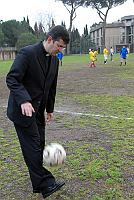
A participatory church meeting is like a soccer game. It involves teamwork , trust, selflessness, and interaction. It is many people sharing the ball, not one man keeping the ball to himself. A participatory church meeting is a community of people coming together to care for each other in the presence of and under the direct leadership of the living, resurrected Jesus Christ. Participatory church (PC) enables you to experience the exciting eloquence of everyday people expressing their experiences with the living, resurrected Jesus Christ.
“Richard Foster, author of Celebration of Discipline, puts it this way: “It is perfectly appropriate for any person in the congregation to speak a timely word from the Lord.”
“How could you have a soccer team if all were goalkeepers? How would it be an orchestra if all were French horns?” –Desmond Tutu
“Soccer’s not a game that you can restrict players, especially creative players.” –Tiffeny Milbrfett (Perhaps church would be more effective and more exciting if it didn’t restrict all the players but one to the passive role of sitting and listening.)
Is a one-man sermon like one-man soccer?
Here are more church lessons from sports:
What The Church Can Learn From a NASCAR Pit Crew


 Free Gas for Your Think Tank -- Short Reflections, Lasting Encouragement
Pingback: Communication in Contemporary Culture vs. Communication in Church | Free Gas For Your Think Tank (A blog to jog your mind and unclog your heart . . .)
Pingback: What Kind Of God Do We Need? | Free Gas For Your Think Tank (A blog to jog your mind and unclog your heart . . .)