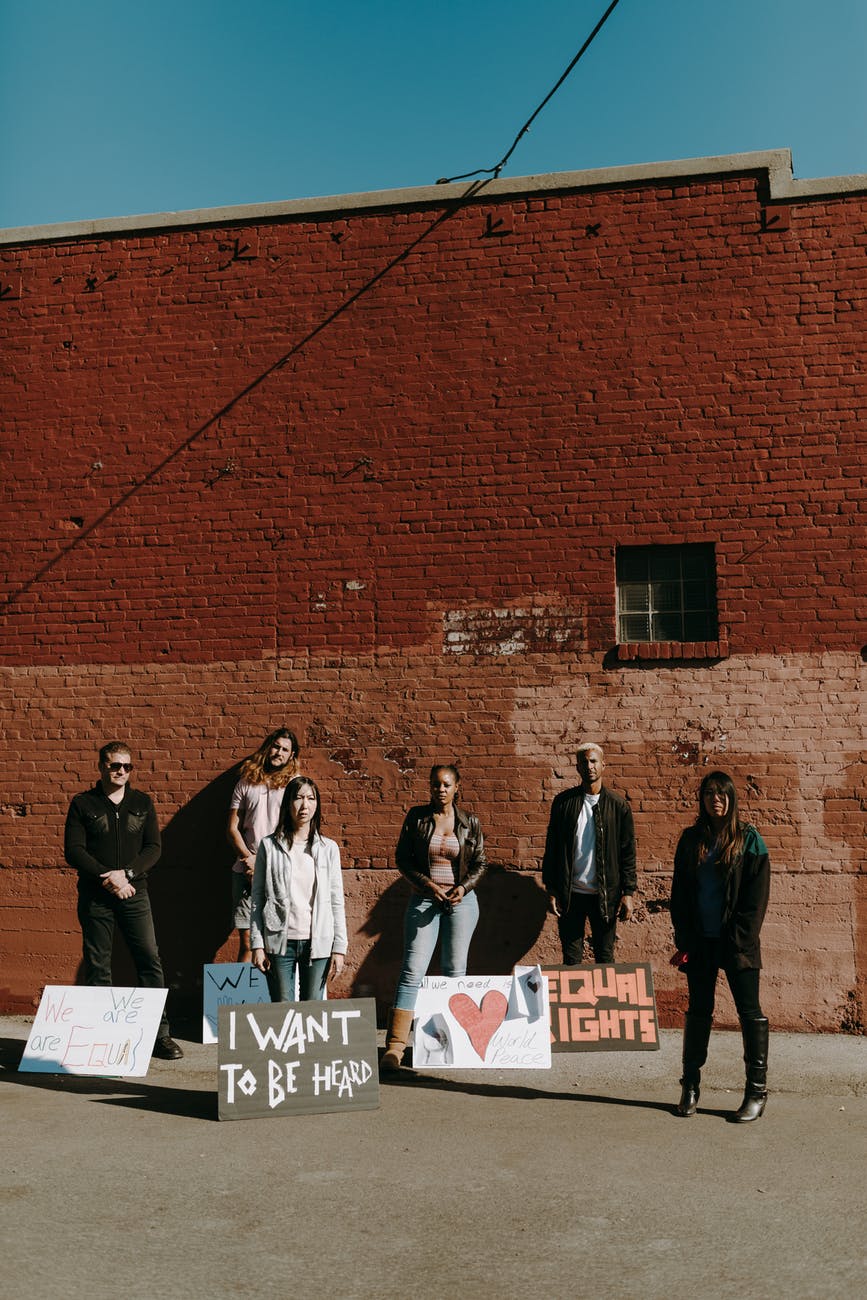
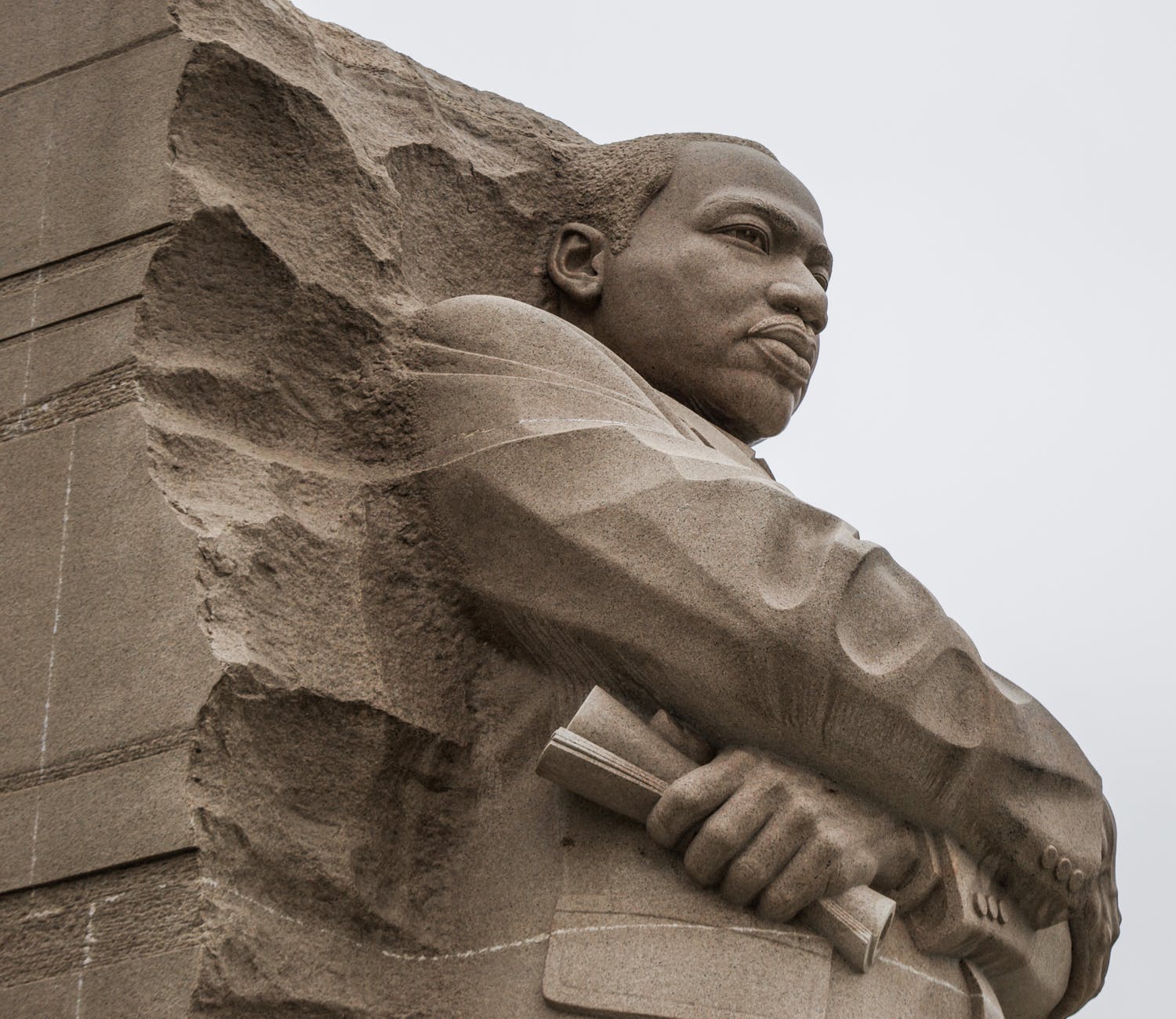
I love to express what I feel called to say. Writing helps me to open up my heart and do that. I hope that what I write helps you in some way. I hope it makes you think, encourages you, or inspires you. If it challenges you or if you disagree, I hope you know that I respect your right to have a different point of view.
No skin color is a reason for shame nor a badge of honor. Skin color’s just a physical characteristic like the shape of a hand.
Physical differences (like skin color) obviously exist, but the concept of different races is a man-created concoction.Unfortunately, common sense concepts about race seldom match the centuries of dogmatic, traditional thinking about it.
Skin color is merely a descriptive, physical characteristic of people. It’s not an identifier that defines who they are.Skin color isn’t divisive, but the concept of categorizing people and defining their value by skin color is.
If race was a reality instead of a myth, a person with a white and a black parent would be considered just as white as black.Instead of admitting the truth, historically a baby from a white and black parent was called black so that it could be legally human trafficked.
Most of us have been trained to see people as members of different races instead of as fellow members of the human race.Racial identity based on color was invented in the 1600s as an attempt to make one group inferior in order to justify slavery.Color-based racial-identity was intentionally set up to create the destructive illusion of intrinsic superiority and inferiority.
The history of how skin color was made into a false hierarchy of of human value should be taught to all so we never do that again.To heal America’s racial wounds, when we see fellow citizens, lets identify them as Americans, not by their skin color.
People notice eye color, but they don’t define people by it. Let’s treat skin color the same way.
Separating people into color-based categories released much hatred and cruelty in history. Continuing those categories is dangerous.Skin color’s a human characteristic, but it was wrong when humans began to use it to divide people into a hierarchy of categories.
When neighborhoods can be easily identified by skin color, there’s either intentional or systemic differentiation going on.If we’re not careful, we can find ourselves looking down on skin color that for centuries was used to label people as inferior.
I like my blue eyes, but I don’t want to be labeled by them; same with my skin. I’m an individual, part the human race.Fellow humans: The color of your skin doesn’t make you any more different than me than the color of your eyes does.
If racism was defined as “differentiation between people because of skin color” would you consider yourself free from racism?In a one color world, would some people have found other reasons than color to split the human race into races?
I've never been abused
Suspected or accused
Because of my blue eyes.
I wish things were the same
For my fellow humans
With darker skin.
Don't you?

For more non-traditional think about race, check out my book: Off the RACE Track--From Color-Blind to Color-Kind. Thank you.
To be vulnerable is to be valiant. To be violent is to be cowardly cruel.
To truly love people requires us to be vulnerable. To dislike them or to look down on them, doesn’t.
Ego and vulnerability never team up. They’ve been practicing cancel culture since the beginning.
You can’t fake vulnerability because it never pretends that it’s something that it’s not.Vulnerability is the willingness to open up your heart, to deeply care, to be humbly honest, to dispense with defensiveness.
Joy can’t flow thru a shut down heart. It takes vulnerability to experience rivers of joy.
Instead of focusing on the living Jesus, many Christians try to fill the empty tomb with religious activities. But Jesus left His tomb empty so that He could continually fill your heart with His presence.
The risen Jesus wanted His disciples to meet Him in Galilee (their hang-out place), not to decorate the empty tomb.Jesus wants us to follow His voice in our heart the way we follow the Waze app on our phone.
A church tends to be set up as an organizational hierarchy with little room for the direct leadership of Jesus.When Christians are trained to trust and follow human leadership more than the risen Jesus, His Spirit is systemically quenched.
Instead of training its members to be led by the living Jesus, a denomination sets up a hierarchy that tends toward domination. We need to learn how to practically follow and obey the living Jesus in day to day life.
When you were a tiny, living creature of a few cells, a robustly growing and developing human life, your life mattered to Jesus and it still does. Let Him show you His love.
The belief that our racist past has been fully dealt with is an illusion that causes America much pain and confusion. It’s time to take a compassionate and critical approach to the theory of race that was widely taught and accepted throughout our history and still lingers today. We can’t have Compassionate Racial Togetherness until and unless we face and admit our history.
Compassionate Racial Togetherness
Can heal the racial divide
That torments our land.
If we would listen with an open heart
And humbly face the truth,
We could get beyond our past
And America's racial mess.
A zeal for truth reveals History that’s been concealed And helps people be healed.
Whatever the source of the racial injustice in our past, it’s time that we openly include that past in our history books. Too much history has been erased (or at least hidden or ignored) and needs to be restored.
Much of the racism in American history has never been fully called out. It’s still there waiting to be faced, healed, and overcome.
We’ll never heal our racial divide if we continue hiding from our history. However, if we let past injustice come to the light, we can then truly heal from it. Reevaluating who we were taught to honor and why we honor them is an important exercise in self-awareness.
We need to learn how to love, respect, and listen to people whose skin looks different than ours. We need to make sure that skin color doesn’t cause us to ignore people, refuse to listen to them, or be unkind to them. Perhaps we should stop being partial to our view of history and race and become a truth-seeker willing to listen to other people’s pain. Somehow we need to begin to listen to each other with compassion instead of accusing and criticizing each other.
Racism can be so subtle that it’s not easy to tell when it’s gone. As humans, we need to make sure that skin color doesn’t cause us to ignore people, refuse to listen to them, or be unkind to them. We need to be critical of anything in our history that was used to justify racism.
Skin color doesn’t divide people into races any more than eye color. Slavery could have easily been based on dye of the eye instead of the color of the skin. We can move beyond our history.
To be genuine Begin to unwind The myths That have you entwined.
“Don’t be vulnerable,” Is bad advice, Because if you’re not You’ll be cold as ice.
When your heart Is shut down Your mind Can never truly Unwind.
When “I’m okay,” Isn’t true, It’s probably not The very best thing You could say.
If you won’t share What touches you deeply, You’ll become unaware And no longer care.
Apology Requires the courage To express humility And vulnerability.
Part of being human is being wounded. Everybody needs a compassionate, listening ear to hear them. Be one.When you you try to make your heart vulnerability-proof, you lock it away in solitary confinement.
In a society that frowns on sharing personal information and experiences, it’s easy to think that we’re the only ones who feel the way we do.
Broken people gratefully respond to sincere kindness, but proud people are often threatened by kindness.If you open up and share something that has touched you deeply, it will inspire other people, too.
If we’re not willing to be vulnerable, we’ll feel like it’s necessary to be deceptive.Someone with an open, tender heart has much more ability to touch people’s hearts, than someone with a closed, hard heart.
Vulnerability is a magnet for the living Jesus. It helps move our pride out of His way and attract His presence and power.
Christianity isn’t about memorizing and verbalizing ideas about Jesus. It’s about internalizing Him and letting Him ignite your heart.If you’ll internalize Jesus in your heart, instead of analyzing Him in your mind, you’ll actualize His presence wherever you go.
When you allow the living Jesus to govern and control your thoughts, desires, and emotions, you begin to live in the kingdom of God. Until Christians unite with the risen Jesus, we won’t be united with each other.
Ekklesia, a Jesus-led meeting, can only be experienced when people open their hearts and are willing to be vulnerable.Some people prefer to see Jesus as a historical figure (or a myth), because seeing Him as alive and present makes us vulnerable.
Vulnerability allows God’s light to shine within. Church services tend to curtail vulnerability and openness. Ekklesia embraces it.
True Christianity requires extreme vulnerability–complete submission and surrender to the living Jesus.When I replaced “about me” with “about Jesus,” He caused me to think “about other people” with kindness and compassion.
You can’t internalize the living Jesus as long as your heart’s closed to His presence.The internalization of the living Jesus dissipates life’s mental fog and turns the tables upside down.
Direct connection with Jesus releases inner injections of His life that flow from within you.Here are 3 ways to hang out with Jesus:
1) A specific time and special place; 2) Any time and any place; or 3) All the time and every place.
There’s no fake light. If you don’t have light, you’re in darkness. There’s absolutely no substitute for light. Jesus is the Light
Some people try to shut out their pain. Some shout out their pain. But some let their pain drive them to the living Jesus.
Listening to Jesus is like trying to remember. You ponder expectantly until you become aware.The more people are encouraged to suppress their conscience, the more problems a society has.
Institutionalized religion tends to lead away from dependence on the living Jesus to reliance on human leadership and programs.If you’re not connecting with the living Jesus in church, look elsewhere. Try reading the Bible with an open heart.
When we freely flow with the living Jesus we grow. When we organize and institutionalize Him we go dry and the Holy Spirit is quenched.
When you let Jesus live within, You’ll feel akin To people Regardless of their skin.
Skin color shouldn’t matter but how we treat people always matters. Skin color is a mere, superficial physical characteristic, but humans have sure made it an emotional big deal and used it to intentionally divide people.
When we’re distracted by the color of skin, we miss really getting to know the person within.When you encounter the image of God in someone, the tone of their skin doesn’t matter.However, skin color matters to you:
If you evaluate people because of their complexion,
If you won’t choose to emotionally detach from it and examine racism rationally instead of defensively.
If you don’t see cruelty that was done to any color of people as equally evil.
If you memorialize injustice done to people of your color, but ignore that done to people of another color.
If you look at people suspiciously because of their skin color.
If you’re self-conscious when you’re the only person of your color in a group.
If you’re unwilling to compassionately listen to people of a certain skin tone.
All history matters. A zeal for truth reveals history that’s been concealed and helps people be healed.
When skin color matters in how we evaluate history, that’s racism. Trafficking and abuse are equally evil, no matter the color of its victims.
The best way to receive love is to cultivate and nurture love in your own heart. Kind and loving people are the easiest to love.
To avoid being fake, we have to be real. Authenticity requires the courage to be vulnerable.
To be creative is to courageously make yourself vulnerable. There will always be people who express disapproval of your ideas.
A person is a vulnerable and immaterial being. As much as the body can be hurt, the spirit can be wounded even more.
All human beings are fragile. We’ve just been trained to hide it and to pretend that we aren’t.
Most people have some tenderness (a soft place) in their heart, but sometimes it’s really hard to find it.To truly listen to people and hear what they are saying, from their perspective, takes much more courage than ignoring what they say
When people open their heart to people they’d rather not, they discover a surprise connection, they never knew was there.When honestly sharing your heart is more important to you than the responses you get from sharing it, you’ll be free.
Without trust, vulnerability, and faithfulness, relationships are shallow and easily shattered.It takes courage to abandon life’s masquerade and become a parade of humility, truth, and vulnerability.
I prefer truth over my own opinions, but often it’s hard to know the difference. That’s why I need to be vulnerable.
I write books that challenge people to be vulnerable. Here are a few.
Guilt or pride for things done before you were born is illogical; being honest about them isn’t.America’s moved beyond a history of intentional racism promoting, to racism denying. That’s progress. Now we need racism healing.
Talking about race isn’t divisive. Ignoring or denying it’s negative impact is.It’s good to have compassion for people who are hurting from what they see as racism but we won’t know how other people think and feel, if we refuse to compassionately listen to them.
It takes courage and effort to go beyond the box of bias-based thinking.To get beyond bias, examine the history of your nation as if you are reading the history of a nation you’ve never heard of before.
If we spent as much time trying to understand racism as we do trying to deny it, we’d be able to move beyond so much focus on it.It’s difficult to be truthful if you’re not willing to be uncomfortable.
A colorless examination of how slaves were treated would be appalling to almost anyone.Regardless of the color of the slaves or slaveholders, slavery was cruel and unjust.
We can’t not see skin color, but we can reject the value hierarchy that history puts on skin shade.I like people whose skin color doesn’t match mine just as much as people whose does.When I meet a person, regardless of skin color, I see a fellow and equal human being.
If learning something doesn’t align your thoughts and feelings with truth, then you’ve memorized it, but not truly learned it. It’s important that we align with truth and not twist truth to try to make it align with us.
Learning about the cruel parts of American history has altered my thoughts and feelings. Here’s how.
“Who talks most about freedom and equality? Is it not those who hold The Bill of Rights in one hand and a whip for affrighted slaves in the other?” ―Alexander Hamilton
The Bill of Rights is the first ten amendments to the U.S. Constitution. It originally was a list of protections for White Americans to enjoy. However, since at the time most Black people in America were considered to be property and not citizens or full human beings, for most Black people in Americans The Bill of Rights was a bill of wrongs—a price most Black people were required to pay in full.
Here is my attempt to reveal the truth of how the Bill of Rights applied to Black people at the time of its writing and during the times of slavery. (Of course, many of these abuses continued after emancipation and were supported by Jim Crow laws that weren’t struck down until the 1960s.)
First Amendment for White Americans: “Congress shall make no law respecting an establishment of religion, or prohibiting the free exercise thereof; or abridging the freedom of speech, or of the press; or the right of the people peaceably to assemble, and to petition the Government for a redress of grievances.”
First Amendment as originally applied to most Black people: “Blacks will be prohibited from the free exercise of religion, especially the religion of their homeland. They shall not be allowed to learn to read any religious material, especially the Bible. They shall not be allowed to gather for worship without a white person present to monitor and control the meeting. Blacks shall not be allowed any freedom to speak any of their own ideas, feelings, or opinions; but shall be required to say whatever those whites exercising authority over them shall demand. Blacks will not be allowed to learn to read or write and therefore should have no freedom of the press. If Blacks try to assemble on their own, they will be forcibly dispersed. Blacks will have no right to petition the Government or any other institution or individuals for a redress of grievances.”
Second Amendment for White Americans: “A well-regulated Militia, being necessary to the security of a free State, the right of the people to keep and bear Arms, shall not be infringed.”
Second Amendment as originally applied to most Black people: “Defenseless Blacks being necessary to the security of slavery, Blacks are not to be seen as people and therefore have no rights to any arms whatsoever. In fact, weapons of all kinds are to be kept away from them at all costs. They are to be in and to remain in a totally defenseless state.”
Third Amendment for White Americans: “No Soldier shall, in time of peace be quartered in any house, without the consent of the Owner, nor in time of war, but in a manner to be prescribed by law.”
Third Amendment as originally applied to most Black people: “If ever necessary, soldiers shall do whatever they are commanded to do in order to forcibly keep Blacks in perpetual bondage, servitude, and subservience.”
Fourth Amendment for White Americans: “The right of the people to be secure in their persons, houses, papers, and effects, against unreasonable searches and seizures, shall not be violated, and no Warrants shall issue, but upon probable cause, supported by Oath or affirmation, and particularly describing the place to be searched, and the persons or things to be seized.”
Fourth Amendment as originally applied to most Black people: “Since Blacks aren’t officially people and their persons (in most cases) belong to a White owner, they have no right to be secure in anything. Their houses, and effects and even their bodies, are all solely the property of their master and can be violated at any time. They have no papers since they are not allowed to learn to read or write. Warrants are completely unnecessary and there is no need for probable cause. In fact, their blackness itself is probable cause they have already done something wrong, just by existing. They can be forcibly searched and seized at any time and in any place.”
Fifth Amendment for White Americans: “No person shall be held to answer for a capital, or otherwise infamous crime, unless on a presentment or indictment of a Grand Jury and except in cases arising in the land or naval forces, or in the Militia, when in actual service in time of War or public danger; nor shall any person be subject for the same offence to be twice put in jeopardy of life or limb; nor shall be compelled in any criminal case to be a witness against himself, nor be deprived of life, liberty, or property, without due process of law; nor shall private property be taken for public use, without just compensation.”
Fifth Amendment as originally applied to most Black people: “Blacks being personal property, not properly persons, shall be held to answer for a capital or otherwise infamous crime (whether real or imagined) without any knowledge of a Grand Jury, regardless of the case. Their master may abuse, torture, rape, and even kill them (whether they have committed a crime or not). They may be put in jeopardy of life or limb as many times as their master may desire. They will always be required (and forced if they refuse) to witness against themselves and against one another. They have no access to any due process of law. Since most Blacks are private property (and have already been deprived of life, liberty, and property), they cannot be taken from their master for public use (like building the U.S. Capitol) without just compensation paid to their master.”
Sixth Amendment for White Americans: “In all criminal prosecutions, the accused shall enjoy the right to a speedy and public trial, by an impartial jury of the State and district wherein the crime shall have been committed, which district shall have been previously ascertained by law, and to be informed of the nature and cause of the accusation; to be confronted with the witnesses against him; to have compulsory process for obtaining witnesses in his favor, and to have the Assistance of Counsel for his defense.”
Sixth Amendment as originally applied to most Black people: “Since most Blacks are property, they have no more right to a public trial than livestock. There is no need to waste the time of a jury. Besides, Blacks are not allowed to testify in a trial anyway. There is also no need for Counsel because there is no allowable defense for their insubordinate and rebellious behavior.”
Seventh Amendment for White Americans: “In suits at common law, where the value in controversy shall exceed twenty dollars, the right of trial by jury shall be preserved, and no fact tried by a jury, shall be otherwise re-examined in any court of the United States, than according to he rules of the common law.”
Seventh Amendment as originally applied to most Black people: “As property, Blacks have no right to common law or trial by jury, no matter what is done to them. The courts of the United States are not available to them.”
Eighth Amendment for White Americans. “Excessive bail shall not be required, nor excessive fines imposed, nor cruel and unusual punishments inflicted.”
Eighth Amendment as originally applied to most Black people: “Blacks can be held in lifelong bondage (and their generations after them) and their master can demand any excessive price he wants for them and turn down any price . He is allowed to inflict as many cruel and unusual punishments upon them as he desires . . . even to the point of death.”
Ninth Amendment for White Americans: “The enumeration in the Constitution, of certain rights, shall not be construed to deny or disparage others retained by the people.”
Ninth Amendment as originally applied to most Black people: “Although Whites may claim other rights that are not listed in the Constitution, Blacks aren’t considered to be people and therefore aren’t allowed to claim any rights, whether listed in the Constitution or not.”
Tenth Amendment for White Americans: “The powers not delegated to the United States by the Constitution, nor prohibited by it to the States, are reserved to the States respectively, or to the people.”
Tenth Amendment as originally applied to most Black people: “Since Blacks are not mentioned in the Constitution (except for the disguised mention in the 3/5 clause, where they are counted as 3/5 of a person, solely to increase the representation in Congress of the states where they are being held in slavery), the state Blacks live in and the people of that state, may do anything they desire to their Black population.”
Here’s what Rev. Larry Britton, pastor in the Church of God in Christ, wrote about it: “Steve Simms’ book, Off the Race Track, is thoroughly informative and creative in its approach to sharing many of the details of the African American experience. The profound insights, regarding some of the salient facts of the African American experience, are awe-inspiring. (Especially since he is Caucasian.) As a 66 year old African American man I have lived through legal segregation; participated in the 1960’s protests; and been victimized by Jim Crow laws, and job and social discrimination all my life. It is powerful to attest to the truths detailed in this book. The Bill of Rights section is profound.”