Anticipate congeniality — cordial people seldom feel tied up in knots


Be cordial, even when you’re not in one accord with people. That will help keep your heart getting tied up in angry knots.

What you anticipate is up to you. You can excitedly look forward to inspiring events, or dread fearful ones.

The anticipation of joy makes the present moment joyful. The anticipation of trouble for tomorrow, troubles today.

People’s attitudes and behaviors are influenced by how you expect them to act toward you. Expect congeniality.

If you’re pleasant, friendly, and agreeable, most of the people you encounter will be as well. If you’re the opposite, look out!

Congeniality leads to positive interaction, kindness, friendship, and heart connection.

You can enjoy friendship with people even if you don’t agree with their beliefs or behaviors.

If you anticipate aggression from someone, you’ll, be closed and defensive; if kindness, you’ll be open hearted.

When I anticipate people being kind to me, they almost always are.

Anticipate congeniality–cordial people seldom feel tied up in knots.

If you try to understand people instead of trying to overpower them, your interactions will be better.

Following the living Jesus keeps me in excited anticipation of the amazing things He is going to do through out the day.

To congregate for a religious service, but not allow people to interactively participate, doesn’t give them much to anticipate.

Posted in Uncategorized | Tagged , , , , | Leave a comment

Cheer up with cheerfulness & playfulness

When you feel like there’s no way to cheer yourself up, do something kind to help someone else cheer up.

The best way to face the day is with a cheerful face.

Cheerfulness is a happiness multiplier that spreads joy and lights up people’s day.

The more cheerfulness that you give away, the more happiness you enjoy!

Cheerfulness consists of a warm heart, bright eyes, smiles, peace, and joy.

Joy will surprise you,
If you learn every day
How to appreciate
The gift of now.

Life lived with cheerfulness is more enjoyable than life lived without it.

When someone says that you’re too cheerful, that means they’re jealous of your joy.

A day without cheerfulness tends to get weary. Learn to be a little cheery and life wont’ be so dreary.

Sometimes cheerfulness requires determination.

If you want to be happy, choose and begin to daily implement a practical strategy for becoming more cheerful.

People need the freedom to be playfully spontaneous. Without it we tend to wither into lifeless agendas and passive programs.

Spontaneous, creative play offers experiential knowledge that mere lectures can’t achieve.

A playful attitude can help you learn to turn everyday situations into enjoyable and uplifting experiences.

Playfulness is the ability to be openly and actively cheerful about simple little things.

Much that we call creativity is simple playfulness–playing with words, ideas, numbers, thoughts, emotions, paint, music, etc.

Spontaneous playfulness is a stream of creativity that flows from deep within, that anyone can tap into.

If playfulness is a form of immaturity, then creativity is, too, because they’re basically the same thing.

Unprogrammed, spontaneous play can open up an inner flow of joy in both children and adults.

By viewing adult play as organized, serious, and even competitive, adults tend to miss out on the stress relief of harmless silliness.

Being playful isn’t just silly. A “play-cebo” (a little bit of playfulness) has many psychological benefits.

When Jesus said to be like a little child, I think He meant: openness, playfulness, innocence, cheerfulness, and humility.

If you watch small children, you’ll find playfulness. If you join in their fun, you’ll find playfulness inside yourself.

A little friendly playfulness (a “play-cebo”) can make any environment less stressful–even the US Congress.

I think that if American Congressional Republicans and Democrats would pair up and play rock paper scissors together, they could overcome their egos

When you find yourself whistling, cheerfulness is spontaneously flowing from within you. Don’t stop it!

People spend a lot of money to beautify their face, but cheerfulness does a better job, and it’s free!

Cheerfulness isn’t natural for me, but everyday I consciously choose to try to think and act with joy, no matter how I feel.

When you fell threatened by someone, responding cheerfully rather than fearfully will usually produce a better outcome.

Choose entertainment that inspires you to be cheerful, rather than that which merely distracts you from your life.

A bird’s chirp can cheer your up, but only if it’s noticed and appreciated.

Being high or inebriated is a poor substitute for heart-felt, genuine joy. 

You’re blessed.
Be hopeful;
Be cheerful;
Be grateful;
Be buoyant;
Be glad!

Cheerfulness or gloom?
Hope or fume?
The mindset I consume,
Will color my room.

Posted in Uncategorized | Tagged | Leave a comment

Don’t worry, be cheerful; here’s how . . .

Happiness can be remembered in the past and looked forward to in the future, but it’s made in the present moment. Be happy now.

Cheerfulness unexpressed, tends to wither away, but when shared with other people, it grows.

Life is wonderful when experienced with wholesome cheerfulness.

Heart-felt cheerfulness is amazing therapy.

To get water to flow out of the ground, sometimes you have to dig a well. It’s the same with getting cheerfulness to flow from your heart.

When people interact with kind cheerfulness, they experience heart-to-heart connection.

Playfulness, silliness, and cheerfulness work together to produce joy, but pride often tries to stop them.

Cheerfulness depends much more on your attitude than it does on your circumstances.

Anger shuts down cheerfulness and drives away joy. You can’t, “Rejoice in the Lord, always,” if you keep animosity in your heart.

If you’re unhappy, you’re probably overlooking many reasons that you have to be happy. Try making a list of them.

Inner conflict hinders happiness; inner peace expedites it.

Happiness that depends on circumstances, chemicals, or carousing, is not the real deal.

My happiness is up to me. I must find a way to find contentment, fulfillment, and joy in my life.

Determined cheerfulness has a biblical goal: “Rejoice in the Lord, always.

Life’s more fun when lived cheerfully.

The living Jesus gives me cheerfulness, glee, and holy ecstasy. The Bible calls it: “joy unspeakable and full of glory.”

Cheerfully interacting with and trying to encourage someone, makes me happy.

If you choose to resist joy because you don’t want to be cheerful, at least don’t try to impose gloom on others.

It’s hard to find happiness if you don’t know what it is.

The risen Jesus frequently causes me to glide with gladness, like an eagle soaring over rough terrain.

Success without happiness is incomplete.

When you truly know God loves you, you won’t feel a need to look down on anybody.

No matter the square footage of a family’s house, without love it falls short of being
a home.

Happiness acrostic:

Hope
Awe
Peace
Patience
Inspiration
Niceness
Ethics
Service
Selflessness

Posted in Uncategorized | Tagged , , , , , , , , , | Leave a comment

Practical ways to overcome divisiveness

To help avoid conflict, talk about something you have in common with someone, before you disagree with them. Say “we” before you say “you.” Angry people defuse when you continually respond to them with friendliness.

When someone offends you with words, a long pause before you speak can help in two ways. 1) It gives you time to think, and 2) It confuses them.

The unwillingness to find a compromise keeps conflict and divisiveness alive. Angry words are often irrational, irrelevant, and insincere–a flood of negative emotion, rather than what a person really believes. It’s better to bow out of a conversation than to allow yourself to be rude and demeaning.

Rude people provoke retaliation. Then get angry when it comes back at them. To insult people is to intentionally provoke and/or escalate conflict. To mock someone is basically asking them to retaliate against you.

When you’ve been hurt by someone, meditate rather than retaliate. Fresh insight can help you win without a fight. Sometimes the best response to a person’s hostile words is to surprise them with kindness.

Seeing conflict as a competition makes it difficult to find a fair resolution. As long as your pride is more important to you than conflict resolution, you’ll be at odds with people. To de-escalate a conflict, avoid making accusations and/or demands.

If you want people to respond positively to what you have to say, try saying it politely. Making demands tends to increase hostility. Politely offering suggestions helps to de-escalate it. Being persistently polite is pragmatic. It motivates people to respond positively to you.

To convince someone of something, you need to see from his perspective; to antagonize someone, you don’t. Learn to be kind, even when you don’t like someone’s attitude or appearance. Refusing to listen to the pain that drives someone’s anger, extends conflict,

Try this simple, yet powerful response to hostile words. Kindly say, “It feels like you’re trying to provoke me.” To over-react to someone’s words is to allow yourself to be manipulated by them.

Reactive listening is selective. It only wants to hear what will justify an angry response. Blame blows up friendly conversations. Attacking someone’s character will greatly increase conflict. People tend to get angry if they feel like you won’t consider what they have to say.

When you don’t feel a need to be right, it’s much easier to avoid angry conversations. A powerful way to de-escalate an argument is to use self-deprecating humor.

If you try to win an argument by demeaning someone, he will probably retaliate and escalate the argument. Resorting to hostility and disrespect is the sign of a poor negotiator. Trying to intimidate people rather than negotiate with them, is the way to surround yourself with continual conflict.

It’s better to use information and negotiation to find solutions, than to use accusation and anger to stir up conflict. If we take the time to logically think through disagreement, it can reveal concealed ways to heal our divisions.

A courageous, sincere apology is a powerful tool for de-escalating conflict. Consistent kindness is capable of turning an foe into a friend.

Depending on how you handle it, disagreement can lead to either conflict or creative solutions. Conflict can be handled either in a defensive, emotional way, or a detached, rational way.

It usually takes more courage to listen to people than it does to argue with them–to learn from them rather than correct them.

Words can escalate or de-escalate disagreements. Freedom of expression doesn’t mean the unrestrained escalation of angry words.

Posted in Uncategorized | Tagged | 2 Comments

Let Jesus be your thought leader

Jesus warned His disciples to watch out for religious teachers who like to “be greeted with respect” and “have the most important seats.”

Let Jesus be your thought leader. Make your mind follow Him.

Posted in Uncategorized | Tagged , , | Leave a comment

“Don’t know much about history . . . but I do know . . .”

For some parts of history people say, “We will not forget;” for other parts they say, “We will not remember.” I’m a part of humanity. All human history is my history. Like every piece of a jigsaw puzzle, every person is an important part of the human race.

If you make no room in your life for historical investigation, you’ll be stuck in the view of history you were taught in school. People who repeat ineffective or unjust attitudes (or actions) from the past, haven’t learned the lessons of history.

History’s not as simple as it is usually presented. Historical accuracy that doesn’t ignore the fuller story of history, matters.

Too often history is a feel good narrative of the past, rather than a search for what actually happened. The courage to learn from uncomfortable history will broaden your perspective on the present. To better understand the mystery of the future, seek a broad understanding of the past.

Be your own historian. Don’t simply accept one perspective on the past. Dig in and discover things you don’t know.

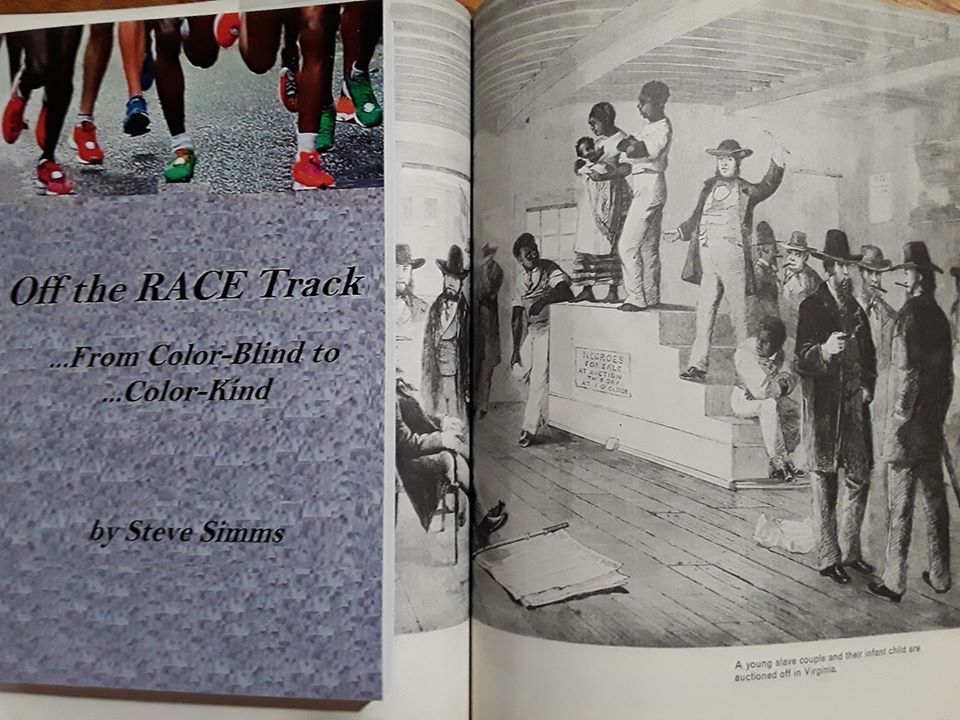
Censoring and erasing the history of racial injustice leaves us with an incomplete view of the past. It good to read history books that examine more than you already know (or think you know). Learning how injustice in history could have been avoided, can show us how to avoid injustice in the future.

Depending on our focus, history can either illuminate the present with light or burn it down with hate. The cycle of painful history repeating itself reveals that people don’t really learn much from history.

People who’ve had to swim against a stream of injustice know its strength. Those who haven’t, often think injustice doesn’t exist. A broad reading of history offers us a present of centuries of experience, understanding, and guidance to make life better today.

To select only the history that makes us proud is deceptive. To include the parts that humble us brings us closer to truth. Freedom of speech includes the right to talk about unpleasant events that history classes have ignored.

Our story of the past will always be incomplete. We always need a fuller story. If we search for hidden or ignored history, it can serve as an early warning system for the future.

The injustice committed by a country is frequently omitted from its history books. To avoid knowing painful parts of history is denial.

Selective history that ignores the parts we don’t like, is a form of deception and dishonesty. Black History tries to correct that. If we’re unaware of where America started racially, then we won’t know how far we’ve come.

“Color-blind” people don’t notice that the details of the living conditions of black people have been left out of American history. Often when people use the term “color blind,” they’re unaware that they’re “injustice blind.”

When blacks in America first began to convert to Christianity, most white churches refused to accept them as equal brothers in Christ.

If schools teach black people about Woodrow Wilson, they should also teach white people about William Monroe Trotter. Here’s a quote from James Baldwin: “American history is longer, larger, more various, more beautiful, and more terrible than anything anyone has ever said about it.”

For some fresh insights into history and race, click here.

Photo by Pixabay on Pexels.com
Posted in Uncategorized | Tagged , , , | Leave a comment

Christianity is either human-desire-led or Spirit-led

When Christians are led by our own desires, we disagree with and separate from each other; when Spirit-led we unite heart-to-heart. Church separates Christians into thousands of groups, denominations, and tribes, but Jesus prayed that we all be one.

Church is often called “a hospital for the sick.” Hospitals don’t continually lecture people. They heal them and send them out. It’s simple to offer healing listening to people. Try it sometime. Make eye contact. Focus on what someone is saying. Don’t interrupt or argue. Don’t walk away.

Biblical Christianity calls us to Spirit-led living–day by day obedience to the risen Jesus. The more Christians obey the living Jesus, the more connected they become; the less, the more divided.

Christians are supposed to live a Spirit-led lifestyle, to follow and obey Christ in us, not our own feelings, opinions, or desires. I love to let Spirit-led prayer pour out of my heart. Too much order breeds unbending habit in church, but humble, heart-felt spontaneity allows the Holy Spirit to take charge.

Righteousness isn’t based on comparison, on being morally superior to others, but on God’s standards. The Bible says that no one is righteous (no one does no wrong in their thoughts, words, or behaviors). Romans 3:10

Posted in Uncategorized | Tagged , , , , , , | Leave a comment

Battery Church

Battery “church” is like a special battery, all decked out to preach to some lowly batteries. Unfortunately, it’s powerless because there are no connections and little unity for the power to flow through.

Christianity’s not sitting in a religious audience to listen to a talk about Jesus. It’s letting Jesus live in and through you.

I’m the evidence of God’s existence. So are you. Let’s don’t hide our light in “battery church.”

When worship becomes programmed formalities, it’s easy to leave the heart out of it. To be led by the Holy Spirit is to live beyond likes or dislikes.

Until Christians become one like Jesus prayed in John 17, by actually connecting heart-to-heart with Him and with one another, we’ll be as powerless as disconnected batteries. Here’s how we can go beyond “battery church” and open up to God’s presence and power!

“Battery church” is powerless.
Posted in Uncategorized | Tagged | Leave a comment

Does saying, “I’ll be honest,” mean you been insincere up to that moment?

Insincerity is motivated by the fear of truth. The fear of truth too often robs us of freedom from lies and deception. A closed heart feels threatened by sincerity.

When people say, “I’ll be honest,” I wonder what they’ve been before that moment. The courage of an open heart helps us live with the absence of pretense.

Untruthful people can’t trust themselves. At least they can’t trust their own words.

People try to not let their harmful feelings show. It’s better to not let them grow–to treat them as an inner foe and make them go.

When proof verifies unpleasant truth, it takes courage not to dodge, disallow, or deny it. When people have the courage to be sincere and to openly expose their heart, they experience deep connection with other people.

Calling your opinions and feelings, “my truth,” doesn’t make them accurate reflections of reality. We can sincerely believe that we know the truth about something yet still be wrong about it.

It’s hypocrisy for an insincere person to call someone a fake. To violate your conscience is insincerity, even if no one but you ever knows it.

I prefer reality over formality; sincerity over pretense. True friendship cannot grow beyond the sincerity level of either friend. When human hearts genuinely connect, pretense melts away and sincerity rushes in.

A sincere compliment is powerful. Find something that you genuinely admire about a person and tell them about it. Fight the inner anger that tries to keep you from actively loving your enemies and blessing those who curse you.

You have the ability to find and assemble your own words. You don’t have to repeat or share what other people say.

Tears don’t always mean pain. Sometimes they’re a sign of deep sincerity. To grow in sincerity is to open your heart up to incredible experiences with God.

Posted in Uncategorized | Tagged | Leave a comment

Opt for optimism

I think that I’m by nature a pessimist, but rationally I choose to be an optimist. I work very hard at it.

Life looks beautiful when viewed thru the prism of optimism. My favorite “ism” is optimism. Will your struggles be problems or or will they be adventures? It’s your call.

Optimism doesn’t just wait for a better future. It works to improve today. Optimists optimize their options.

Optimists will persist until they see hope break through the mist of despair. It’s easy to be discouraged. I prefer to struggle for hope by persistently pursuing the challenging call to optimism.

Optimists see opposition as an opportunity to use their positive outlook to overcome obstacles. Hope (the expectation that a desire will be fulfilled) + optimism (confidence about the future) = hopetimism.

Optimists don’t insult people. They find the good in people and inspire them to live it out.

Optimism gives you the fortitude to stay hopeful when things look bad, and to get up and keep going after a fall. When your comfort zone cracks up and leads you to a happy future, you realize that it wasn’t what it was cracked up to be.

Posted in Uncategorized | Tagged , , , , , , | Leave a comment