Is God Like Map Quest Or A GPS?

Some people think that God is like Map Quest:  He gives you directions, a plan, instructions.  Then you study them and figure out how to follow them, if you want to.  (And/or you go to weekly meetings and listen to someone talk about and explain your written instructions.)

I think God is more like a GPS.  He doesn’t just give you directions to read and study.  He is actually present with you and He speaks to you step by step:  “Turn now on the ramp to enter Interstate 77.”

The last time I took a car trip, I used both.  I read the Map Quest directions before I left home.  But then, on my trip, I listened to and followed my GPS.

The Bible, God’s written word, is like Map Quest.  It gives us directions and instructions.  Yet God wants to speak to us even more directly than through His book.  The purpose of the written word is to connect us with the Living Word, Jesus Christ.  Scripture is to lead us into a direct relationship with Jesus.  The Bible, itself, teaches us that God still speaks directly to individual people:  “My sheep hear My voice.”

God wants to be our GPS and to speak to us every step of the way, every day of our life.  In fact, that is one of Apostle Paul’s definitions of a Christian:  “As many as are led by the Spirit, these are the sons of God.”

Perhaps it is time plug in our spiritual GPS and be led by the Spirit.  If not now, when?  If not us, who?

Posted in apologists, God, lifestyles, organic church, religion | Tagged , , , , , , , , , , , , , , , , , , , , , , , , , | 2 Comments

Holy Spirit Quenchers — How We Stop God From Working

One of the most ignored commands in the New Testament consists of 4 simple words:  “Quench not the Spirit.”  When we read the New Testament book of Acts, we see the amazing power and vitality of the unquenched Holy Spirit — mighty demonstrations of God’s power; transformed people, living holy lifestyles and changing their world. 

When I compare my life and my Christian experience to that of the believers in the book of Acts, I don’t see the same spiritual power, the same life transformation, and the same mighty move of God that they saw.  An Anglican priest once put it this way:  “Everywhere the Apostle Paul went there was either a revival or a riot.  Everywhere I go there is a tea party.” 

So why is my Christian lifestyle so much weaker than that of the first believers?  Perhaps it is disobedience to those 4 simple words:  “Quench not the Spirit.”

But how do I quench the Spirit?  Here are some possible Spirit quenchers:

*  Being bound by tradition:  Jesus, Himself, said that our tradition can make “the Word of God of no effect.”  Perhaps we follow tradition in church gatherings rather than being open to and obeying the promptings of the Holy Spirit.

*  Wilful disobedience:  Perhaps we know that God wants us to do or say something and refuse to do so.

*  Wilful sin:  Perhaps we think, say, watch, listen to, or do things that we know are morally wrong.

*  Focus on self:  Maybe we think of our needs, concerns, and wants rather than obeying Jesus’ command to deny ourself and follow Him in the way that He lived. 

Perhaps it is time to remove the Holy Spirit quenchers.  This will not “just happen.”  It will take a radical passion for God and a herculean commitment to follow and obey Him, no matter what the cost. 

But perhaps it is time . . .  If not now, when?  If not you and me, who?

“If My people who are called by My name will humble themselves and pray and seek My face; and turn from their wicked ways, then I will hear from heaven, forgive their sin, and heal their land.”  II Chronicles 7:14

Posted in apologists, God, history, lifestyles, organic church, religion | Tagged , , , , , , , , , , , , , , , , , , , , , , , , , , , , , , , , , , , , , , , , , , , , , , , , , , , , , , | 6 Comments

My Question For Civil Rights Leader, Ralph Abernathy

Famous Civil Rights leader, Ralph Abernathy, was a campus speaker when I was in college. In a packed ball room he told about his experiences in the Movement and about working with Dr. Martin Luther King, Jr.

After his lecture, he asked if there were any questions. I threw my hand up and he picked me. I asked: “Rev. Abernathy, would you please tell us how you came to know Jesus Christ as your personal Savior?”

Rev. Abernathy seemed a bit startled by the question. He paused, then he said: “When I was a young boy I went to the altar one Sunday morning in my father’s Baptist church and there I met Jesus Christ. And I’ve never been the same.” Then he got excited. He sounded like he was preaching from the pulpit in that special black-church style. For five minutes or so he boldly declared his love for Jesus Christ.

After we were dismissed, several angry people rushed up to me. One guy said: “Why did you ask him THAT?” “I was curious,” I said.

Another firmly stated: “He wasn’t here for THAT!” I replied, “He didn’t have to answer my question.” But I am sure glad he did. Even today, as I remember Ralph Abernathy’s passion for Jesus Christ, I am inspired!

Posted in apologists, biography, black history, history, Jesus Christ, lifestyles, religion, self-help | Tagged , , , , , , , , , , , , , , , , , , , | 1 Comment

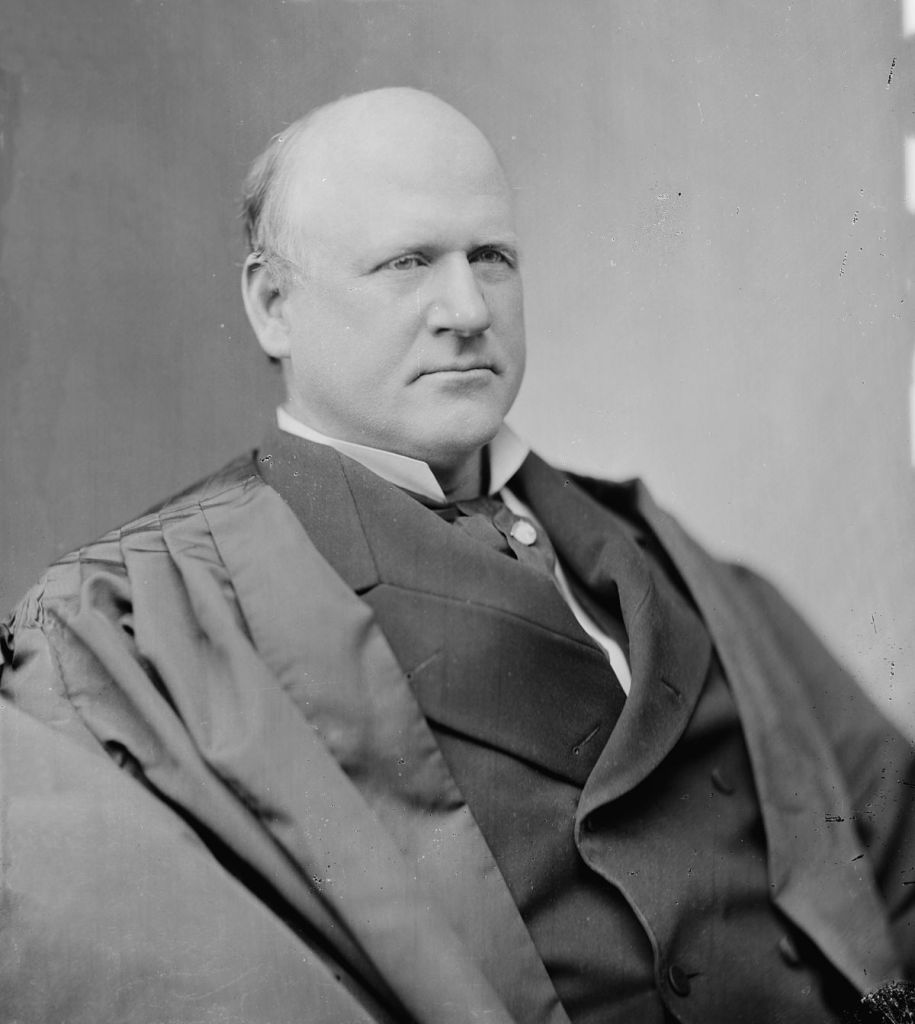
America’s Bravest Supreme Court Justice — John Marshall Harlan

Although I didn’t rank John Marshall Harlan in my Top 10 Greatest Americans, I do consider him to be American’s Brave Supreme Court Justice ever. He was a true American hero of equality.

In 1896, seven men heard Homer Plessy’s story about being forbidden to ride in the “whites only” section of a train coach by a state law of Louisiana. If Homer, a Louisianan of mixed race, wanted to ride, the state law said he had to ride in a coach set aside for black people.

Homer Plessy insisted that enforced segregation compromised the principle of legal equality and marked blacks as inferior. The seven men, all Supreme Court Justices, all voted that forced segregation was constitutional. The seven justices wrote: “If one race be inferior to the other socially, the constitution of the United States cannot put them upon the same place.”

This judgment legally separated the blacks and whites. It basically canceled the Fourteenth Amendment to the Constitution, which says: “No state shall make or enforce any law which shall abridge the privileges or immunities of citizens of the United States.” Those seven men cleared the way for legally sanctioned racism, intimidation, discrimination, segregation, terrorism, and persecution of black people for the next sixty years. For example, at the time of this ruling, in 1896, more than 100,000 Africian-Americans in Louisiana were registered to vote. Ten years later there were only about 1000. One lone man, however, said NO–Supreme Justice John Marshall Harlan. He wrote:

“In the eyes of the law, there is in this country no ruling class of citizens. There is no caste here. Our constitution is colorblind, and neither knows nor tolerates classes among citizens. In respect of civil rights, all citizens are equal before the law. The humblest is the peer of the most powerful. The arbitrary separation of citizens on the basis of race, while they are on a public highway, is a badge of servitude wholly inconsistent with the civil freedom and the equality before the law established by the Constitution. It cannot be justified upon any legal grounds.”

Who was John Harlan, this hero who dared to speak the truth against American racism in the highest court in the land? John Harlan of Kentucky, was a former slave-holder and defender of slavery. He had fought for the Union Army but had spoken against the Emancipation Proclamation (which did not apply to Kentucky). John Harlan did not free his slaves until the ratification of the Thirteenth Amendment forced him to in December 1865.

Six years later, in 1871, Harlan, former slave-holder, said: “I have lived long enough to feel and declare that the most perfect despotism that ever existed on this earth was the institution of African slavery. With slavery it was death or tribute. It knew no compromise, it tolerated no middle course. I rejoice that it is gone.”

When asked about his turn around on the issue of slavery, John Harlan would reply: “Let it be said that I am right rather than consistent.” What could have changed him so? History doesn’t give a clear answer, but something must have touched his heart.

The terrorism of the Ku Klux Klan in Kentucky pushed him toward equal rights. He was shocked by the arson, beatings, and murders. He became friends with a leading Republican, Benjamin Bristow, who was the United States Attorney for Kentucky. Bristow fearlessly prosecuted the white terrorists. Somehow Harlan saw the truth of the wickedness of American racial injustice, and when he did, he never looked back. He said: “The most perfect despotism that ever existed on this earth was the institution of African slavery.”

That is why John Harlan could stand alone in 1896 and boldly say: “In my opinion, the judgment this day rendered will, in time, prove to be quite as pernicious as the decision made by this tribunal in the Dred Scott Case.” Like a prophet John said: “The thin disguise of ‘equal’ accommodations will not mislead anyone, nor atone for the wrong this day done.” 

For more American heroes of equality, go to: Off the RACE Track–From Color-Blind to Color Kind. Thank you. 

Justice John Marshall Harlan
Posted in black history, history, lifestyles, Supreme Court | Tagged , , , , , , , , , , , , , , , , , , , , , , , , , , , , , , , , , , , , , , , , , , , , , , , | 3 Comments

Am I Related To Heroic, Runaway Slave, William Simms?

Twenty year-old William Simms was being held captive against his will. Although he had never committed a crime or been in a military setting, he was being forced to do hard labor with six other captives.

The people holding them prisoner and making them work were led by a woman named Mrs. Mason. One of the captives overheard one of their captors say: “When this job is done, I’ll destroy that breed o’ dogs.” So William Simms and the six others decided their best chance for survival was to attempt an escape. They knew that if they were recaptured they would either be killed or tortured.

The seven fled on foot, leaving on a Saturday night and following a mountain range that they knew led to the border and to their freedom. They traveled only at night, lying up in the woods during the day. The weather was cold and wet and there was some snow.

Their meager provisions quickly gave out and after several days they were nearly starving. William Simms later said he was so exhausted that he had to crawl on his hands and knees to relieve his feet. Four of them were caught, but Simms and two others made it to freedom in 1858 with help from the Underground Railroad.

William Simms later married and settled in South Danby, New York, where he rented land and farmed. He is remembered because a fifteen year-old white boy, Arthur Charles Howland, who lived on a neighboring farm, interviewed him and took notes about Simms’ escape from slavery. Those notes are posted on the internet at http://www.rootsweb.com/~nytompki/tsimm.htm

I was moved by William Simms’ story. We share the same last name and it is possible that I am related to him. I am descended from four Northern Irish Simms brothers who initially settled in North Carolina in the 1780’s. “William” is a common name in our family tree (I am related to the famous American author and slaveholder, William Gilmore Simms). William Simms escaped from slavery on a farm in Virginia.

Simms’ story is just one of the many thousands of American heroes who risked their lives in attempts to escape from being held as human property. Many were killed. Many were tortured. Many were “sold down the river.” And many, like Simms, made their escape. But they all took heroic action in the name of freedom.

Has anyone better lived out Patrick Henry’s cry; “Give me liberty or give me death,” than America’s runaway slaves? Frederick Douglas, perhaps the most famous runaway slave; Said: “In coming to the fixed determination to run away from slavery, we did more than Patrick Henry. With us it was a doubtful liberty at most, and almost certain death if we failed.” Harrett Tubman said: “There was one of two things I had a right to, liberty or death. If I could not have one, I would have the other.”

Throughout our history, many Americans have risked much for freedom–the Founding Fathers, Patriots, Abolitionists, Underground Railroad Conductors, the men and women of our Armed Forces–all stood up courageously for the cause of individual liberty. There are many monuments and memorials to them in our country. But where are the monuments to the great courage and heroism of America’s runaway slaves?

Thank you, William Simms, for your brave stand for freedom! Sincerely, Steve Simms.

If you want to know more about some of America’s greatest heroes, check out my book, Off the RACE Track, @ https://amzn.to/2O7Jazd

off the race track color cloth

Posted in black history, history, lifestyles, self-help | Tagged , , , , , , , , , , , , , , , , , , , , , , , , , , , , , | 7 Comments

A Haircut From Oprah’s Dad . . .

“Get a haircut from Vernon Winfrey,” for weeks that thought kept going through my head–and it frightened me. I am a white guy and I had never had a haircut in a black barber shop. Mr. Winfrey is Oprah Winfrey’s father and runs a barber shop in East Nashville.

Deciding to act on this strange “leading,” I called Winfrey’s Barber Shop. He answered. I asked how much a haircut was. He said ten dollars. I said I would be there soon. I got on the internet, found the directions, then drove to his shop. As I turned on Vernon Winfrey Avenue, my throat felt dry. I saw the shop. There was Mr. Winfrey standing outside with several other men. I felt panic and drove out of the neighborhood. The next morning I got a haircut at my usual place.

“At least I tried,” I thought. But I knew–I had “chickened out”–and was going to have to go back when my hair grew out. So why was I so afraid? I didn’t fear physical harm–although I remembered how those courageous black people who integrated lunch counters in the 1950’s were treated–(those folks were real heroes). But all I was being asked to do was get a hair cut in the Twenty-First Century.

A few weeks later, I drove to his shop again, with a determination to succeed. Fortunately, no one was standing outside when I got there. There was a parking space by the door. I jumped out and rushed into the shop, before I could think about what I was doing.

My abrupt entry startled me. The building was small. Three barber chairs were to my right and Vernon was standing behind the first one cutting a 12 year-old’s hair. Five men were in the waiting area.

I glanced around and then stared at Mr. Winfrey who had stopped cutting and was staring back at me. No one spoke. I could feel my heart pounding.

Finally I got some words out: “I, uh, would, uh, (pause) like to, uh, get a haircut.”

“Sure, take a seat,” he replied.

“I’ve got to be somewhere in an hour,” I said. “Can you get me before then?”

“I can’t get you in an hour,” he said.

Whew, did I feel relieved–for about two seconds–until the thought popped in my head, “Ask if he can get to you tomorrow.” I got those words out and Vernon said tomorrow would be better for him because he wouldn’t be so crowded. “Ok,” I said, “See you tomorrow.”

The next day I walked in and sat down. Vernon was cutting a young man’s hair and talking with another gentleman. Another barber was cutting hair in the third chair. I flipped through a magazine and waited.

“I can get you next,” Mr. Winfrey said. In a few moments the clippers were going and we were engaged in pleasant conversation. I noticed an old newspaper on the wall with a huge headline that read: “Vernon Winfrey–# 1 Barber in Tennessee.”

I asked: “Were you really the best barber in Tennessee?” He chuckled. Then I noticed the masthead of the newspaper. It read: “Hillbilly News.”

“A friend brought me that from Gatlinburg,” he said.

Several people came in: a former Nashville city council member, a preacher who works with drug addicts, a current city council member, a lawyer, and a retired Fisk University professor. I quietly enjoyed their conversation so much I didn’t even notice the time.

Mr. Winfrey spent about an hour on my haircut. Toward the end he whispered: “When I first moved my shop here, this was a white neighborhood. I had one white man who started coming to me and I cut his hair for many years, even after the neighborhood changed.”

I was pleased with my haircut and with the time and attention Mr. Winfrey devoted to me. I really enjoyed the people. And I couldn’t have asked to be treated any better. It was a wonderful experience.

So why was I afraid to get a haircut with a college professor, city council members, a preacher, and a lawyer? Could it be that the “color line” still plagues us in 21st Century America?

This post is the first part of the first chapter of my book: “Off the RACE Track–From Color-Blind to Color-Kind.” It’s available at this link: https://www.amazon.com/Off-RACE-Track-Color-Blind-Color-Kind-ebook/dp/B07HYHHK19

Posted in black history, history, lifestyles, self-help | Tagged , , , , , , , , , , , , , , , , , , , , , , , , , | 2 Comments

How Did The Church At Antioch Launch A Great Missionary Work?

There were five leaders in the church at Antioch.  The five guys sharing leadership were:  Barnabas, who had a reputation as an encourager; Simeon called Niger (good chance he was of black African descent); Lucius of Cyrene which is currently a part of Libya; Manaen, who grew up with King Herod (obvioursly upper class); and Saul who had violently opposed and persecuted the church before his miraculous conversion.

This diverse group of leaders didn’t function from positional authority, ego, self-promotion, or tradition.  Instead they sought to corporately hear and obey God’s direction by worshipping and fasting. 

One day they heard these words from God:  “Set apart for Me Barnabas and Saul for the work to which I have called them.”  So after more prayer and fasting, the three remaining guys laid their hands on the two guys and sent them off. 

Saul’s name was soon changed to Paul and both he and Barnabas became known as Apostles, which means, sent ones.  This began a great expansion of Christianity as Barnabas and Saul/Paul began to travel and plant new communities of believers through out Asia Minor.

In a previous post I told the story of how the first Apostles made a decision to begin to set up an administrative structure in the church of Jerusalem, but immediately after that, the church was demolished by persecution (led by Saul and others).  All the church was scattered except the Apostles (the sent ones) who stayed put in Jerusalem. 

However, Antioch was different.  (Acts 13)  We are not told that the leaders there tried to set up a system of administration.  Instead they sought God in prayer and fasting.  They listened and sought to hear His will.  Once the 5 leaders at Antioch were convinced that they had heard from God, they acted on what they heard and sent Barnabas and Saul/Paul on their way.

Barnabas and Saul were not appointed to be exalted, positional leaders in a local church.  Rather they were sent to go and plant new churches.  However, even in establishing new churches, Barnabas and Saul were not to install themselves as lifetime leaders and controllers of those Christian communities.  Instead Barney and Paul taught new churches to rely on Jesus and to allow Him to be what Apostle Peter called their “Chief Shepherd” which in modern English means “Senior Pastor.” 

The leaders at Jerusalem appeared to want to establish an institutional system.  However, the leaders at Antioch appeared to want to allow the living Jesus to run the show.  What do you think about these two situations?

Posted in apologists, God, history, lifestyles, organic church, religion, Uncategorized | Tagged , , , , , , , , , , , , , , , , , , , , , , , , , , , , , , , , , , , , , , , , , , , , , , , | 17 Comments

What They Are Saying About Berry Street

“The Salvation Army Berry Street Worship Center is a wonderful place where the Love of God is very evident! and the Spirit of God too! You will not leave without knowing that!” –Felicia Knox

“Every time Shane, Seth and I go (to Berry Street) we feel so blessed to be a part of something so wonderful. I have been brought to tears before from sensing the power of the Holy Spirit moving in that place. You have angels in that room there and we thank you all for creating what you have there.” –Ally Gray Decker

“Berry Street is authentic, welcoming and warm. It’s Spirit led in a very unique way, without agendas except for exalting and knowing Jesus more. I love the diversity of people and the flow as things unfold. There’s intimacy and joy and it’s really encouraging to see what a church meeting can still be. It’s probably more like the churches in Acts must have operated, and what is evident is the beauty in the Body of Christ.” –Tom Cartwright

“I’ve had the opportunity to be at the Sunday meeting a couple of times at The Salvation Army Berry Street. This is not usual ‘church’. In most Sunday church meetings, the most potent and valuable voices for encouragement, challenge and growth are usually silent. But the meetings at Berry Street are not like ‘most Sunday church meetings’. The congregants often speak boldly and willingly share the pieces of God that they carry in their chests. And as I hear their words, I am closer to finding my own voice to talk and sing about the piece of God in my chest.” –Grant Norsworthy

“I must say that I enjoy Berry Street each Sunday because the Holy Spirit is allowed to work freely through clay vessels, molding and shaping. It is free, yet orderly. It is a blessing and for me it is a necessary place to be….and I love it.” –Elizabeth Butero

“It was awesome! I will be back soon to be a part of what God is doing at Berry Street and I would invite everyone to come and I challenge you to step outside of the contemporary church model and see what God is doing, you might be surprised.” –David Harper

“Berry Street feels like a real family, where strangers are welcome as well as the Holy Spirit. It’s a place of honesty and truth, a place where I’ve seen captives be set free, where people love Jesus and just want to come together and share Him with each other.” –Lara Landon

“I believe that those that come to Berry Street have been sent to receive something that they need to make it through the day or even that up coming week. They may need someone to show them CHRIST’S love, to give them encouragement from the word of GOD. They may need to just talk to someone who will listen to them without judging them. That’s what happens at Berry Street.” –Ida Rebecca Joyner

“My life has been changed by the power of the living God and the move of the Holy Spirit at Berry Street. I get to witness God’s power in action. It is a joy to watch people’s lives change right before your eyes each Sunday.” –Keith Easley, Sr.

berry street family 2016

Come and experience this for yourself! 10:45/Sundays/225 Berry St./Nashville/Tennessee/37207

Also there are two videos on Youtube where people talk about Berry Street.  Check them out:  http://www.youtube.com/watch?v=P4D4EPRec5k  and http://www.youtube.com/watch?v=wG3Lkd5t4w8.

Posted in apologists, Creator, God, lifestyles, organic church, religion | Tagged , , , , , , , , , , , , , , , , , , , , , , , , , , , , , , , , , , , , , , , , , , , , , , , , , , , , , , , , , , , , , , , , , | 16 Comments

Did The Apostles’ Decision Demolish The Church In Jerusalem?

After Pentecost the church in Jerusalem quickly grew into a mega church with at least 5,000 men (Acts 4:4) plus thousands of women and children.  The Apostles were daily distributing food to widows, but some people began to complain because they didn’t think it was being done fairly.

So the Apostles called the whole church together and asked the people to choose seven men “who are known to be full of the Spirit and wisdom” so they could turn the daily food distribution over to them.  The church folks were happy with this idea, so they picked seven guys and the Apostles laid their hands on the seven and prayed for them.

But guess what?  Instead of just running the food distribution according to the plan, one of the seven, Stephen, began to do miracles and to preach on the streets.  He preached so strongly that a lot of non-Christians got mad and stoned him to death. 

A Jewish leader named Saul, who later became the Apostle Paul, actually held the coats of the people who wanted to throw big rocks at Stephen.  That very day a “great persecution” broke out against the believers in Jerusalem and it demolished the church there.  The Bible tells us that all of the Christians except for the Apostles (which literally means “sent ones”) were scattered throughout Judea and Samaria.

The Apostles tried to set up an administrative system, but the men who they appointed to “wait tables” instead did great things.  Stephen did miracles.  Philip went to Samaria, cast out demons, healed people, and brought a mighty move of God to that city. 

The Apostles’ plan didn’t work.  Instead of leading a mega church in Jerusalem while they gave their attention “to prayer and the ministry of the word,” now the Apostles (the “sent ones”) were sitting in Jerusalem and wondering what happened to the church.

Jesus had told the Apostles to “go into all the world and preach the Gospel.”  However, now, thousands of believers were running all around Judea and Samaria talking about Jesus and praying with people, except for the Apostles (God’s “sent ones”).  I wonder why God chose to tell this story in the Bible.  (Acts 6:1 – Acts 8:1)

Posted in God, history, lifestyles, organic church, religion, Uncategorized | Tagged , , , , , , , , , , , , , , , , , , , , , , , , , , , , , , , , , | 4 Comments

Top 10 List — The Ten Greatest Americans

Top 10 Lists are famous.  Here is my list of the Top Ten Greatest Americans (based on the principle of “liberty and justice for all”).

#10  Dorothy Day

#9  William Monroe Trotter

#8  Ida B. Wells

#7  Robert Carter III

#6  The Grimke Sisters

#5  US Senator Charles Sumner

#4  US Congressman Thaddeus Stevens

#3  William J. Seymour

#2  Martin Luther King, Jr.

#1  William Lloyd Garrison

Read more about each of these amazing Americans @ https://amzn.to/2O7Jazd 

Photo by Polina Tankilevitch on Pexels.com
Posted in black history, history, lifestyles, religion, self-help | Tagged , , , , , , , , , , , , , , , | 47 Comments