My #9 Greatest American — William Monroe Trotter

“There can be no freedom without equality.” —William Monroe Trotter

Standing almost alone during the Jim Crow days of forced segregation, open racism, and public lynchings of the early 20th Century, William Monroe Trotter boldly spoke out for equal rights. He was uncompromising in his stand for liberty and justice for all, targeting both the racism of whites and the passiveness of blacks.  Because of this he is a great hero of both black history and American history.

William Monroe Trotter was born in 1872. He graduated from Harvard magna cum laude and Phi Beta Kappa. In 1901 Trotter started a newspaper called The Boston Guardian to protest against discrimination.

In 1905 Trotter, along with W.E.B. DuBois, drafted the Declaration of Principles for the Niagra Movement, which later produced the NAACP. He said: “Persistent manly agitation is the way to liberty. We refuse to allow the impression to remain that the Negro American assents to inferiority.”

Although it was very unpopular, even among blacks, Trotter practiced agitation all his life. He spoke out against Booker T. Washington for encouraging blacks to accept discrimination and the denial of their right to vote. (Washington’s view was known as accommodation.) Trotter was even arrested once for trying to present his view at one of Booker T. Washington’s speeches in Boston. The national press put Trotter down by calling his attempt to speak The Boston Riot.

Trotter spoke out and worked against the popular movie Birth of a Nation that ran down black people and glorified KKK terrorism. (Sad, but even today, Birth of a Nation, with all its racism, is considered a great movie.)

In 1914 Trotter was invited to the White House to meet with President Woodrow Wilson. Wilson held strong racist views and had by Presidential order segregated the postal service on racial grounds. When Trotter asked President Wilson to share his views on racial segregation, Wilson replied: “Segregation is not humbling but a benefit. Your manner offends me.” Then he and Wilson had a strong discussion that lasted 45 minutes. The next day Trotter was attacked on the front page of The New York Times.

In 1919 Trotter went to the Paris Peace Conference (which was to end World War I) in an effort to have them outlaw discrimination. The US State Department had denied him a passport, but he reached France anyway by working as a cook on a ship. There were no black delegates at the peace conference and his efforts to be heard were continually denied.

Trotter died in 1934. With great financial and personal difficulty he had published The Boston Guardian for 33 years. Though not accepted in his times, many of William Monroe Trotter’s methods were adopted in the 1950’s by the Civil Rights Movement, especially his use of non-violent protest.

William Monroe Trotter once said: “I have finally given myself wholly to Christ to be led entirely by God. I have laid all my life, my business, my career, in the hands of Jesus and am to live and move in Him. Trust in Christ and then do what He tells you to at any cost. Don’t trust in yourself, but in the power and help of God.”

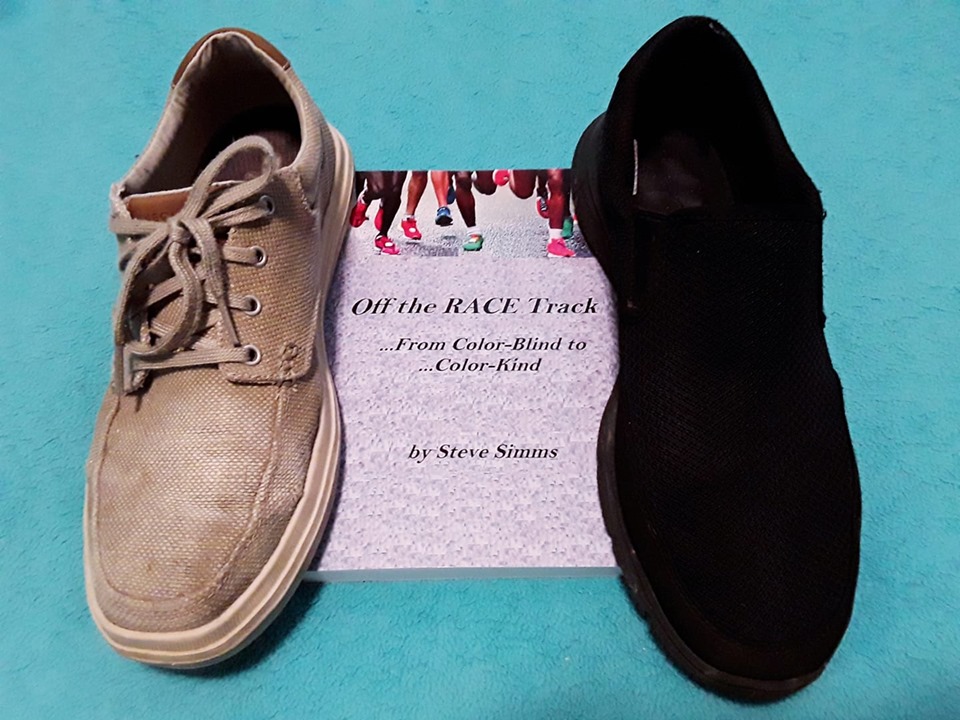
Check out my book, Off the RACE Track–From Color-Blind to Color-Kind. Thank you.

Posted in black history, history, lifestyles, self-help | Tagged , , , , , , , , , , , , , , , , , , , , , , , , , , , , , , , , , , , , , , , , , , , , , , , , , , , , , | 5 Comments

Top Ten Greatest Americans #10 — Dorothy Day

  Number ten is Dorothy Day. Here’s a quote from her. “No one has a right to sit down and feel hopeless. There is too much work to do.” 

Dorothy Day was born in 1897 and grew up in Chicago. She was very sensitive to the needs of others and as a young woman got involved with the communists and with sexual immorality and felt pressured to have an abortion. Later she met a man who was an atheist and wanted to escape from life. Dorothy moved to the beach with him for three years, but she couldn’t accept his atheism. She got pregnant again and this time refused to have an abortion. This broke up her relationship so she moved to New York City with her new daughter.

There she met Peter Maurin, a French Catholic, who helped influence Dorothy to trust her heart belief in God and to begin to obey God’s leading. She turned from her old lifestyle and began to follow Jesus Christ. She said: “My manifesto is the Sermon on the Mount. In May 1933 she and Peter Maurin started a newspaper called The Catholic Worker. By 1936 it had more than 150,000 subscribers. It’s goal was “to promote Catholic social teaching and to promote steps to bring about the peaceful transformation of society”.

Homeless people began to come to her and she allowed several of them to stay in her apartment with her and her daughter. Soon she began to start Houses of Hospitality to help feed and clothe and comfort the poor. And she herself took a vow of poverty. By 1936 she and Peter Maurin had opened 33 Catholic Worker Houses of Hospitality across the USA.

Dorothy day felt the needs of others deeply and was moved by the poverty and injustice around her. Through out her life, she worked tirelessly to help people and to speak up for justice. She was arrested often in the struggle for civil rights, women’s rights, worker’s rights and against war.

Dorothy’s desire was to build a better world and to show the love of Jesus Christ to those who need Him the most. She said: “The greatest challenge of our day is: how to bring about a revolution of the heart, a revolution which has to start with each of us.”

Dorothy reminds me of one of my great heroes from outside America, Mother Teresa. I feature my top 10 greatest Americans in my book: Off the RACE Track–From Color-Blind to Color-Kind. 

Posted in Atheists, black history, history, lifestyles, organic church, religion | Tagged , , , , , , , , , , , , , , , , , , , , , , , , , , , , , , , , , , , , , , , , | 5 Comments

The Power Of Fasting

Fasting is going without food in order to focus on seeking God through prayer.  Spiritual power is released through fasting.

Jesus said that some deliverance only comes “by prayer and fasting.”  Fasting is the active and intentional denial of our body’s desire for food.  It naturally creates physical hunger.  This hunger then makes us desperate and causes us to pray with more passion.  The Bible says that “fervent prayer” accomplishes much. 

Physical hunger shows us our human limitations, humbles us, and makes us hungry for God’s help.  “Blessed are those who hunger and thirst after righteousness, for they shall be filled.” 

By humbling us, fasting opens us up to receive and be filled with God’s Presence and power.  “God resists the proud, but gives grace to the humble.”   

Fasting makes the Bible more real to us.  If Scripture doesn’t burn in your heart when you ready it, try fasting for a day.

Tomorrow (February 19) in Nashville, The Salvation Army Berry Street Worship Center will be hosting a day of prayer and fasting at 225 Berry St., 37207, from 11:00am – 5:00pm.  Everyone is welcome.

Posted in apologists, Creator, God, Nashville, organic church, religion | Tagged , , , , , , , , , , , , , , , , , , , , , , , , , , , , , , , , , , , | 1 Comment

Frederick Douglas — “An American Slave”

Frederick Douglas was claimed to be personal property from his birth around 1818 in the state of Maryland.  He was physically, mentally, and emotionally abused — kept in degraded conditions and treated like an animal.  He was separated from his family and forcibly made to do manual labor without pay.  He was not allowed to learn to read, but he found a way to do so without getting caught.

When he was 20 Douglas courageously escaped from his bondage.  He began to tell people about what he went through.  Without hatred, Douglas spoke with passion and authority about the horrors that had been inflicted on him.  The stories of his unjust suffering moved people deeply.  Eventually he was asked to speak at meetings and he became known as a great orator and abolitionist.

Douglas also wrote a book about his experiences in slavery. He called it: Narrative of the Life of Frederick Douglas — An American Slave. That form of biography is called a slave narrative and there are more than 200 full-length slave narratives written by former American slaves. Plus there are thousands of shorter personal accounts of people’s experience in slavery.

If you’ve not read a slave narrative, Douglas’ book is a good one to start with. His book will forever change how you view American slavery. (For more insights into America’s racial history, check out my book, Off the RACE Track.)

For Frederick Douglas, the words “all men are created equal” were not just words in the Declaration of Independence that could be overlooked in order to justify the cruelties of American slavery, but a passionate belief that he heroically stood for all of his life.  Here are a few quotations from Frederick Douglas.

“The limits of tyrants are prescribed by the endurance of those whom they oppose.”

“Wherever men oppress their fellows, wherever they enslave them, they will endeavor to find the needed apology for such enslavement and oppression in the character of the people oppressed and enslaved.”

“The thing worse than rebellion is the thing that causes rebellion.”

“Those who profess to favor freedom, and yet depreciate agitation, are men who want crops without plowing up the ground.”

“I prefer to be true to myself, even at the hazard of incurring the ridicule of others, rather than to be false, and to incur my own abhorrence.”

“The soul that is within me no man can degrade.”

Posted in Angelina Grimke, black history, Creator, Harriet Beecher Stowe, history, John Brown, lifestyles, Nova, PBS, self-help, The Abolitionists, Uncategorized, William Lloyd Garrison | Tagged , , , , , , , , , , , , , , , , , , , , , , , , , , , , , , , , , , , , , , , , , , , , , , , , , , , , , , , , , , , | 16 Comments

Accepting Black History Into American History

Some people say that we shouldn’t talk about black history in the USA, just American history.  That is a worthy goal — a color blind history where all people are equal.

The only problem is that when we honestly look back at America’s past, skin color was a really big deal.  People with lighter skins were favored by government and institutions, even by the Constitution.  People with darker skins were considered to be less than human, had no legal rights, and could be legally abused and forcibly held in life long bondage even though they had committed no crime.

The legacy of this history of great inequality still affects the psyche of Americans in spite of our attempts to ignore it and pretend it never happened.  Perhaps, it is time to accept black history into American history and as Paul Harvey used to say, teach and tell “the rest of the story.”  After all, the whole story of America, the experience of whites, blacks, Native Americans and other racial groups is the one history of our country.

Perhaps it is time for all Americans to know the details about the abolitionist movement to end slavery; the underground railroad; the courageous slave rebellions; the black codes; the black US senators and congressmen during reconstruction; the regular rape of slave women, the selling of human beings as personal property; the daily life of Americans held as slaves; the laws against black education and Bible reading, worship, and marriage.

O, so much is left our of our American history books.  Every American should read the slave narratives, Stowe’s Uncle Tom’s Cabin, Mark Twain’s Puddin’ Head Wilson,  Frederic Douglas’ autobiography, the fiery writings of the abolitionists, and so much more forgotten American history.  (You’ve just got to read the awesome biography of William Monroe Trotter, one of the bravest Americans ever {and of so many more amazing, yet mostly forgotten, black Americans}.)

So to all those who say, “We don’t need black history; let’s just have American history,” I say, that’s a great idea.  If you really mean it, then personally read the works I mentioned in the last paragraph and then begin to speak out to have them and the details of the African American experience taught and included in all American history textbooks.

Check out some of America’s hidden history in my book, Off the RACE Track, @ https://amzn.to/2O7Jazd

off the race track book shoe

Posted in black history, history, lifestyles | Tagged , , , , , , , , , , , , , , , , , , , , , , , , , , , , , , , , , , , , , , , , , , , , , | 12 Comments

What Skin Color Is Your Church?

Here is a question for you:  What skin color is your church?

Should churches that represent Heaven and all of its glorious human diversity (people from “every kindred and every tribe”) be able to be identified by the prominent skin color of the people who attend?  For example, in the USA, we have Black churches, White churches, Red (Native American) churches, Brown (ie.Hispanic) churches, and Yellow (ie. Korean) churches.

Many years after the end of government sponsored and enforced racial segregation, the Christian churches in American are still some of the most segregated places in our nation.  And most people are not even bothered by that fact.  In fact, the popular church growth movement has taught multitudes of churches and Christians that churches grow better when they are segregated by race, ethnicity, economic status, and/or skin color.

The truth is, however, that segregated churches are a contradiction of the place they claim to represent — Heaven (and the kingdom of God).   Paul taught that Jesus tore down the “wall of partition” between Jews and Gentiles — that people who were divided should now be united in Christ.

For Christians to worship primarily with people who have the same color of skin as they do is a denial of God’s healing and reconciling power.  The glory and the power of the Gospel is shown not when people assemble with people who look like them, but when people worship with and love people from across racial lines.

Anybody can gather with people like them.  However, it takes the supernatural love and power of God to gather with and love people you have been taught not to appreciate.

How we Americans need to finally tear down the walls in our churches and unite in love with believers of different skin shades than our own.  Then the world will be able to see that our religion is real and not just rusty ritual. This can help.


Photo by cottonbro on Pexels.com
Posted in apologists, black history, history, lifestyles, organic church, religion | Tagged , , , , , , , , , , , , , , , , , , , , , , , , , , , | 13 Comments

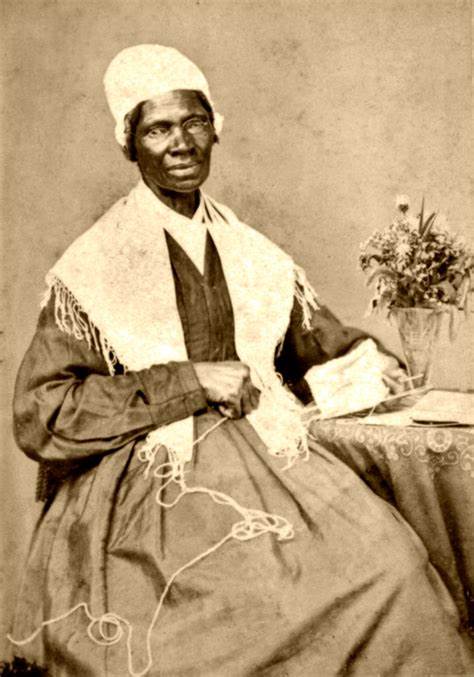
Where Did Sojourner Truth Get Her Name?

sojourner truth

One of the greatest Americans was a woman named Sojourner Truth.  She escaped from slavery in New York in the early 1800s and began to preach across the land.  She was a powerful and passionate speaker and was frequently invited to speak for anti-slavery meetings and in meetings for women’s rights.

So where did she get her now famous name?  She said that God gave it to her:  “The Lord gave me the name Sojourner because I was to travel up and down the land showing the people their sins and being a sign unto them.  Afterward I told the Lord I wanted another name because everybody had two names; and the Lord gave me Truth, because I was to declare the truth to the people.”

This woman heard from God and then obeyed.  She had no education, no financial backing.  She was a former slave and belonged to a persecuted race.  She was bold and spoke the truth, openly telling people their sins and calling on them to stop doing wrong and turn to God.  Yet Sojourner Truth became world famous in her time and is still refered to in most American history books.

How we need people in our time who will listen to God and boldly do what He tells them to.  And that’s the truth!

Sojourner Truth was off the race track. Get a copy of my book Off the RACE Track in paperback or Kindle at this link.

Posted in black history, history, lifestyles, religion | Tagged , , , , , , , , , , , , , , , , , , , , | 2 Comments

I’m Livin’ My Dream In Nashville

I am seeing a dream come true right here in Nashville.  It is so exciting.

For 40 years, I’ve dreamed that a church meeting could operate without the programming, control, and/or direction of a human leader. I’ve searched the country looking for such a church but couldn’t find one.

I’ve also devoured church history looking for one. I found two examples there. Paul of Tarsus wrote in the New Testament that when Christians meet together that each one should participate in the meeting as led by the Holy Spirit. I also read about the early Quakers who met in silence without a human leader and individuals spoke out as prompted by the Spirit.

I served as a pastor several years and tried to implement open participation in church, but never had much success. People seemed to think that it was my job to put on the church meeting. However, for some reason, I have never been able to give up my dream of a church meeting led by the Spirit.

Three years ago my wife and I were invited to start a “non-traditional” church in Nashville. We started from scratch, without any members, so we were free to set the format from the beginning. So we started the meetings with praise and worship led by a different person each week and then had a period of open sharing.

It started slowly as this was a new concept for people. However, as people have continued to attend they have opened up more and more. Now the meetings are amazing. People excitedly share victories, read Scriptures, confess sins, pray, express love and encouragement to each other.

People are visibly changing — growing in love and confidence; gaining victory over habits and sins. Last Sunday we saw this Scripture fulfilled before our eyes: “If an unbeliever or someone who does not understand comes in while everybody is prophesying, he will be convinced by all that he is a sinner . . . and the secrets of his heart will be laid bare. So he will fall down and worship God, exclaiming, ‘God is really among you!'” Paul of Tarsus (I Cor. 14:24-25)

So many people enthusiastically shared what God put on their heart. Finally a woman who was there for the first time stood up and shared in tears that she had been away from God for years but after hearing what God is doing in so many people’s lives, she was ready to get right with Him. So she openly and publicly surrendered her life to Jesus. It was amazing.

This dream has been 40 years in the making. Many good intentioned people said it would never work. There was much discouragement along the way and much temptation to give the dream up and settle for the status quo.

Come and see it for yourself on Sundays at 10:45, 225 Berry St., Nashville, TN 37207 — The Salvation Army Berry Street Worship Center.

Read more in my book: Beyond Church — An Invitation To Experience The Lost Word Of The Bible,  available at Amazon.

169


Posted in history, lifestyles, Nashville, organic church, religion, self-help | Tagged , , , , , , , , , , , , , , , , , , , , , , , , , , , , , , , , , , , , , , , , , , , , | 31 Comments

Why A White Guy Digs Into Black History

Every month is Black History Month to me.  I dig into all the Black History I can find.  When I tell people that I am into reading and studying Black History they usually look at me with a puzzled look and ask “Why?” as if to say, “What’s a white guy doing that for?”

Here are some of my reasons:

1)  I find most of the Black History makers to be amazing people who overcame almost impossible odds.  For example, men and women who were held by intimidation and violence in forced bondage, denied any education, and treated like animals, courageously found ways to survive without hatred.  Many found ways to escape and to tell (and write) their stories in some of America’s greatest literature called slave narratives.

2) Black history reveals many cruel secrets of American history, what I call hidden history.  Without Black (and Native American) History, American history is whitewashed and incomplete.  I want to know the whole story of  American history, not just the parts that make America look good.

3)  As a white guy, I want to understand the full American experience, not just my own or the experience of people with a similar skin shade.  I want to, as much as I can, learn from their experiences.

4)  To ignore Black History is a form of denial — a pretending that it didn’t happen or was irrelevant.

5)  I find Black History both inspiring and heart-rending.  It makes me feel great pain and compassion for those who suffered unjustly on our shores and it amazes me with the human ability to overcome. “The Negro’s past, this endless struggle to achieve and reveal a human identity, human authority; yet contains for all its horror, something very beautiful.” –James Baldwin

6)  When I read Black History I discover and am challenged by a passionate Christian faith and trust in God that is a rarity in our time period.

Check out my book, “Off the RACE Track,” full of inspiration from black history @ https://amzn.to/2tUMAP2

Click here for 10 blogs I’ve written about black history!


Posted in history, lifestyles, religion, self-help | Tagged , , , , , , , , , , , , , , , , , , , , , , , , , , , , , , , , , , , , , , , | 24 Comments

Super Bowl Or Super Goal?

The Super Bowl is big.  Super Bowl Sunday is the second-largest day for food consumption in the United States after Thanksgiving Day.  Munch, munch. 

Most years the Super Bowl is the number one watched show on television.  Even Super Bowl commercials are big, being the most costly TV airtime of the year.  Last year’s Super Bowl (2010) was the most watched TV show in American history with more than 106 million viewers.

We Americans give so much to this for-profit spectacle that adds tremendous wealth to the NFL team owners’ riches, but is only a game — a diversion from the reality of our privileged lives of freedom and materialism.   As Duane Thomas, a Dallas Cowboys quarterback said way back in Super Bowl VI:  “If it’s the ultimate game, how come they’re playing it again next year?”  Now, they have played so many “ultimate” Super Bowl games that the Roman numerals look like chicken scratching to almost everybody. 

Our culture has so many sources of “opiate for the people.”  The Super Bowl, being one of the biggest, will once again enchant and hold us captive to the most powerful brainwashing that American advertising agencies can produce.  Enjoy.  

Here’s an interesting idea:  What could happen if  we Super Bowl viewers became super goal doers?  What if 106 million doers would take the same degree of passion & energy, and time & money, that we spend watching, thinking & reading about, and discussing the Super Bowl and its hype and events, and devote it to a real-life super goal of personal development and/or service to others?

Posted in history, lifestyles, self-help, Super Bowl | Tagged , , , , , , , , , , , , , , , , , , , , , , , , , , , , , , , , , , , , , , , , , , , , , , , , , | 1 Comment